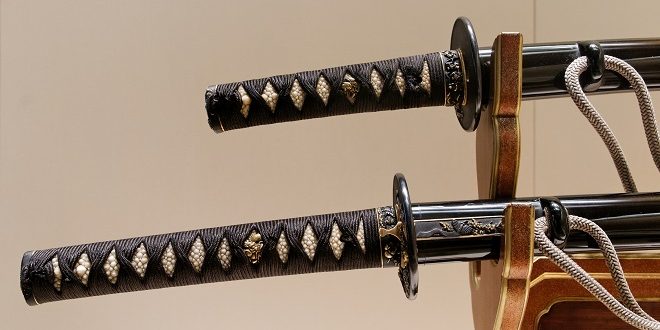
The Japanese sword, often referred to as the katana, is more than just a weapon; it is a symbol of Japanese history, craftsmanship, and culture. Known for its distinctive curved blade, single edge, and circular or squared guard, the katana has been a crucial element of Japan’s martial traditions for centuries. This article explores the history, construction, and cultural significance of the Japanese sword.
Historical Evolution
The history of the Japanese sword dates back to the early Heian period (794-1185 AD). The first swords were straight and modeled after Chinese designs. However, as the need for more effective weaponry in combat grew, Japanese swordsmiths began to innovate. By the Kamakura period (1185-1333 AD), the iconic curved blade of the katana had been developed, providing a more efficient cutting angle and greater strength.
Throughout the centuries, the design and construction of the Japanese sword evolved. The Muromachi period (1336-1573 AD) saw the refinement of sword-making techniques, resulting in blades of unparalleled quality. During the Edo period (1603-1868 AD), the focus shifted from practical use in battle to the sword’s aesthetic and symbolic value.
Craftsmanship and Construction
The creation of a Japanese sword is a meticulous process that requires immense skill and precision. The traditional method involves several steps:
- Tamahagane: The process begins with the smelting of iron sand in a tatara, a traditional clay furnace, to produce tamahagane steel. This steel is renowned for its purity and strength.
- Folding and Forging: The steel is repeatedly heated, hammered, and folded to remove impurities and create layers that give the blade its characteristic strength and resilience.
- Shaping and Polishing: The blade is then shaped, quenched in water to harden, and meticulously polished. Polishing can take weeks and involves various grades of stones to achieve the razor-sharp edge and mirror-like finish.
- Mounting: Finally, the blade is mounted with a handle (tsuka), guard (tsuba), and scabbard (saya). Each component is often a work of art, decorated with intricate designs and precious materials.
Cultural Significance
The Japanese sword is more than just a weapon; it is a revered cultural artifact. In feudal Japan, the samurai class held the sword in the highest regard, considering it their soul. The katana symbolized honor, discipline, and the way of the warrior (bushido).
Even today, the Japanese sword holds a significant place in Japanese culture. It is celebrated in martial arts such as kendo and iaido, where practitioners train to master the art of swordsmanship. Additionally, the katana is a popular subject in literature, film, and art, representing the elegance and precision of Japanese craftsmanship.
Conclusion
The Japanese sword https://www.truekatana.com is an enduring symbol of Japan’s rich history and cultural heritage. From its early development to its status as a cultural icon, the katana embodies the skill, artistry, and values of the Japanese people. Whether appreciated for its craftsmanship, historical significance, or aesthetic beauty, the Japanese sword continues to captivate and inspire people around the world.